Z(n) = 2(L(n)) - 2n
If we expand that we have:
2(n(n+1))/2 + 1 - 2n =
n^2 + n + 1 - 2n =
n^2 -n + 1
Which matches what we found yesterday.
Next the author introduces the Josephus problem. There is a story behind this problem. Josephus was a famous historian of the first century. During the Jewish-Roman war, Josephus was trapped in a cave with 40 other Jewish rebels. They decided to kill themselves rather than surrender. They got in a circle and had every third person kill himself. Josephus and a conspriator decided they didn't want to kill themselves and quickly calculated where to position themselves in the circle so that they were the last ones standing. How did Josephus perform the calculation?
Reading ahead a little authors begin by looking at the same problem, but hop two people instead of three. Lets look at some small examples where every second person is killed.
J(1) = 1
J(2) = 1
J(3) = 3
J(4) = 1
J(5) = 3
J(6) = 5
J(7) = 7
J(8) = 1
J(9) = 3
J(10) = 5
J(11) = 7
J(12) = 9
J(13) = 11
J(14) = 13
J(15) = 15
J(16) = 1
So it appears that the solution depends on n's position relative to the most recent power of 2. It looks like J(n) = 1 + 2(n - "last power of 2")
J(3) = 1 + 2(3-2) = 3
J(4) = 1 + 2(4-4) = 1
J(11) = 1 + 2(11 - 8) = 7
J(15) = 1 + 2(15 - 8) = 15
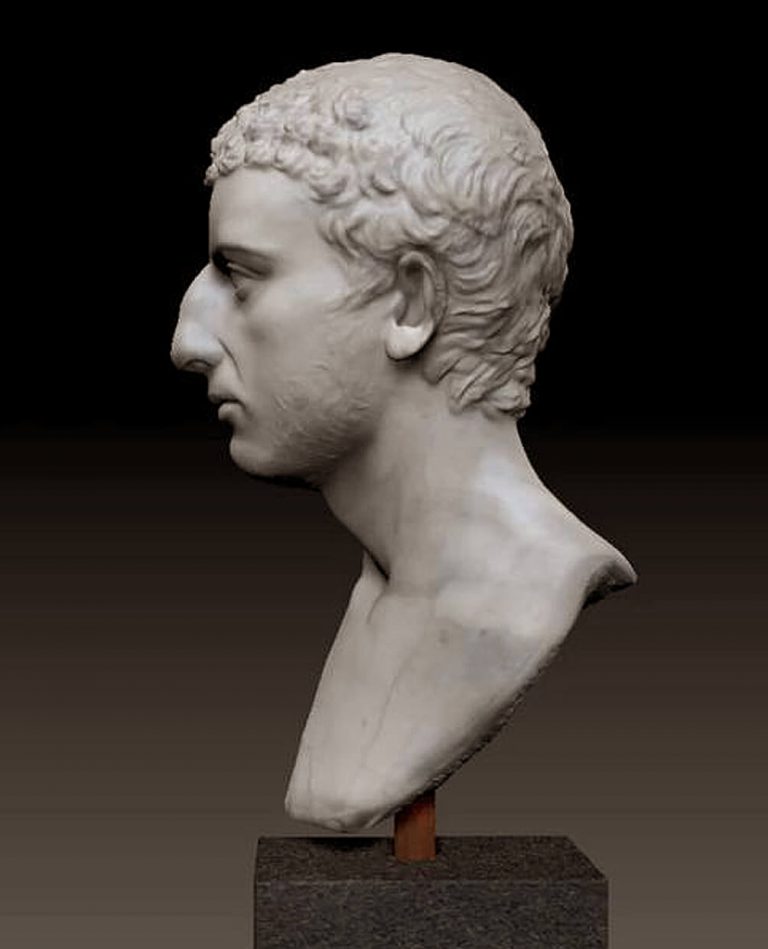
Tomorrow, we'll see how the authors approach the problem. Here's a statue of Josephus:


No comments:
Post a Comment